Ask any salesperson in Malaysia how they reach their customer list and you’ll hear the same word: blast. A WhatsApp blast in Malaysia usually means one message sent to hundreds of people at once, and it works, because almost everyone opens WhatsApp many times a day.
It also has a bad name. Everyone has received the “Dear valued customer” message with five photos and a link, from a number they’ve never seen. Those blasts get ignored, blocked and reported, and the numbers that send them get banned. The good news is that the problem isn’t blasting. It’s how most people do it.

What people mean by a WhatsApp blast
A blast is any way of sending the same message to many people, where each person receives it privately. Nobody sees who else got it, and every reply comes back to you as a one-to-one chat. That’s what makes it so useful for sales: one message can start dozens of separate conversations.
Done well, nobody even thinks of it as a blast. The customer sees a short, personal message from someone they know, about something that matters to them, and answers it.
Three ways to do a WhatsApp blast in Malaysia
1. WhatsApp’s own broadcast list. Free and built into WhatsApp and WhatsApp Business. Each list holds up to 256 people, and the message only arrives for people who saved your number. Fine for a small group of regular customers, but most leads never saved your number, so they simply don’t get it.
2. A blasting service. You hand over your list and message, and pay per message or buy credits. It’s quick, but ask questions first: which number will the message come from, will customers recognise it, and where do the replies go? A blast from a number nobody knows is the kind that gets reported, and replies that don’t reach you are wasted.
3. A tool that sends from your own number. Software like ZuboChat sends your message one at a time from your own WhatsApp number, with each person’s name and details, at a pace you set. Replies come straight back to you and your team in one inbox.
What a WhatsApp blast costs
People search for a WhatsApp blast price expecting one number, but it depends on the route:
- Broadcast lists: free, with the 256-person and saved-number limits above.
- Blasting services: usually per message or per credit pack. Cheap per message, but you pay again for every round, and the cheapest ones are often the spammiest.
- Tools: usually a monthly subscription, sometimes priced per teammate or per WhatsApp number. Some also pass on Meta’s per-message fees for marketing messages, so ask whether those are included.
Compare on cost per reply, not cost per message. A blast of 1,000 messages that gets 10 replies is far more expensive than a blast of 200 that gets 50.
When a WhatsApp blast works best
A blast works when the message is useful to the person getting it, right now. Some moments that work well in Malaysia:
- Renewals and reminders: car insurance, road tax, a service due, a tenancy ending, a six-month check-up.
- Festive seasons: a short Hari Raya, Chinese New Year or Deepavali greeting, with a light offer for regular customers. Keep the greeting first and the offer second.
- Something new for people who asked: a new launch for buyers who enquired about the area, new stock for customers who bought before.
- Following up old enquiries: people who asked for a price months ago and never decided.
A blast works badly when it’s a general promotion sent to everyone on every list. If you can’t say in one line why this person is getting this message, don’t send it to them.
How to do a WhatsApp blast without getting banned
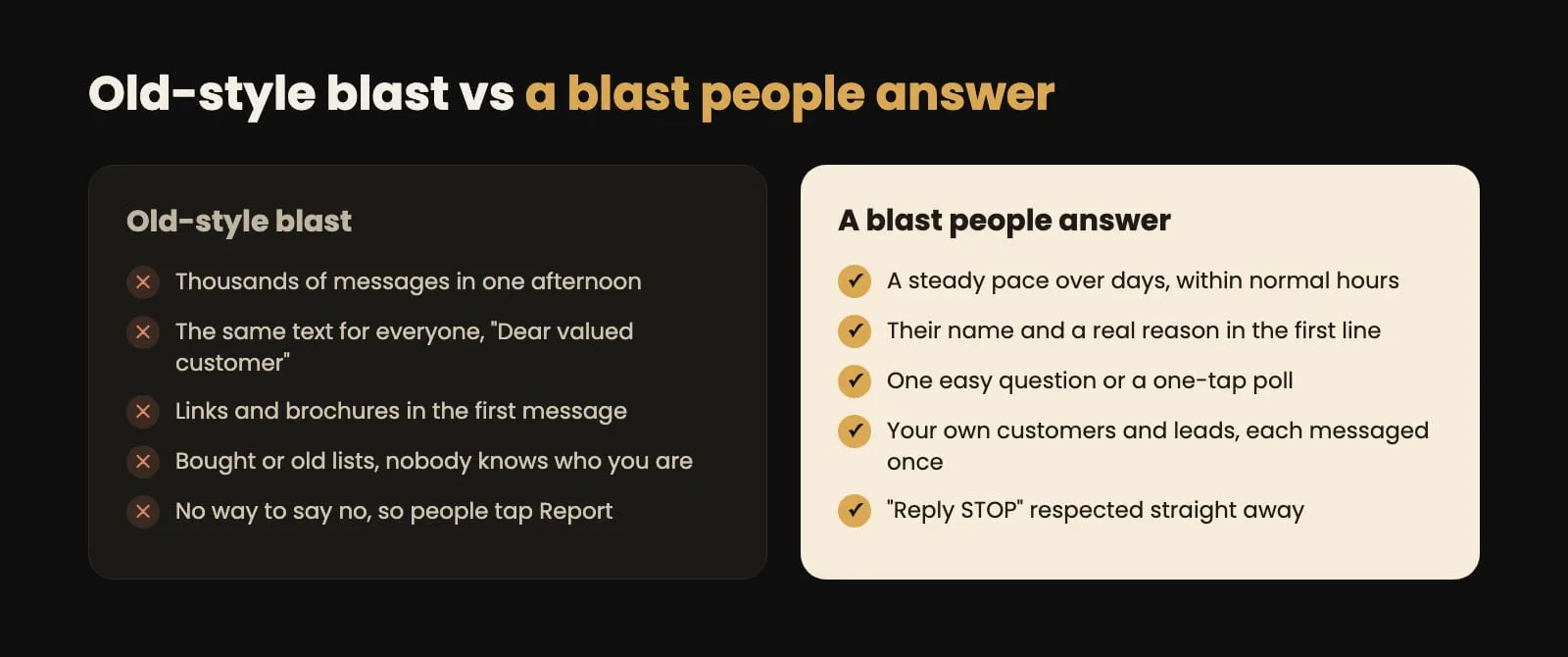
- Use your own list. Customers, past enquiries and leads who know your business. Never buy a list: those people will report you, and a few reports are enough to get a number restricted.
- Clean it first. Write every number the same way, remove duplicates and landlines, and take out anyone who asked you to stop. Our guide to keeping a clean contact list shows how.
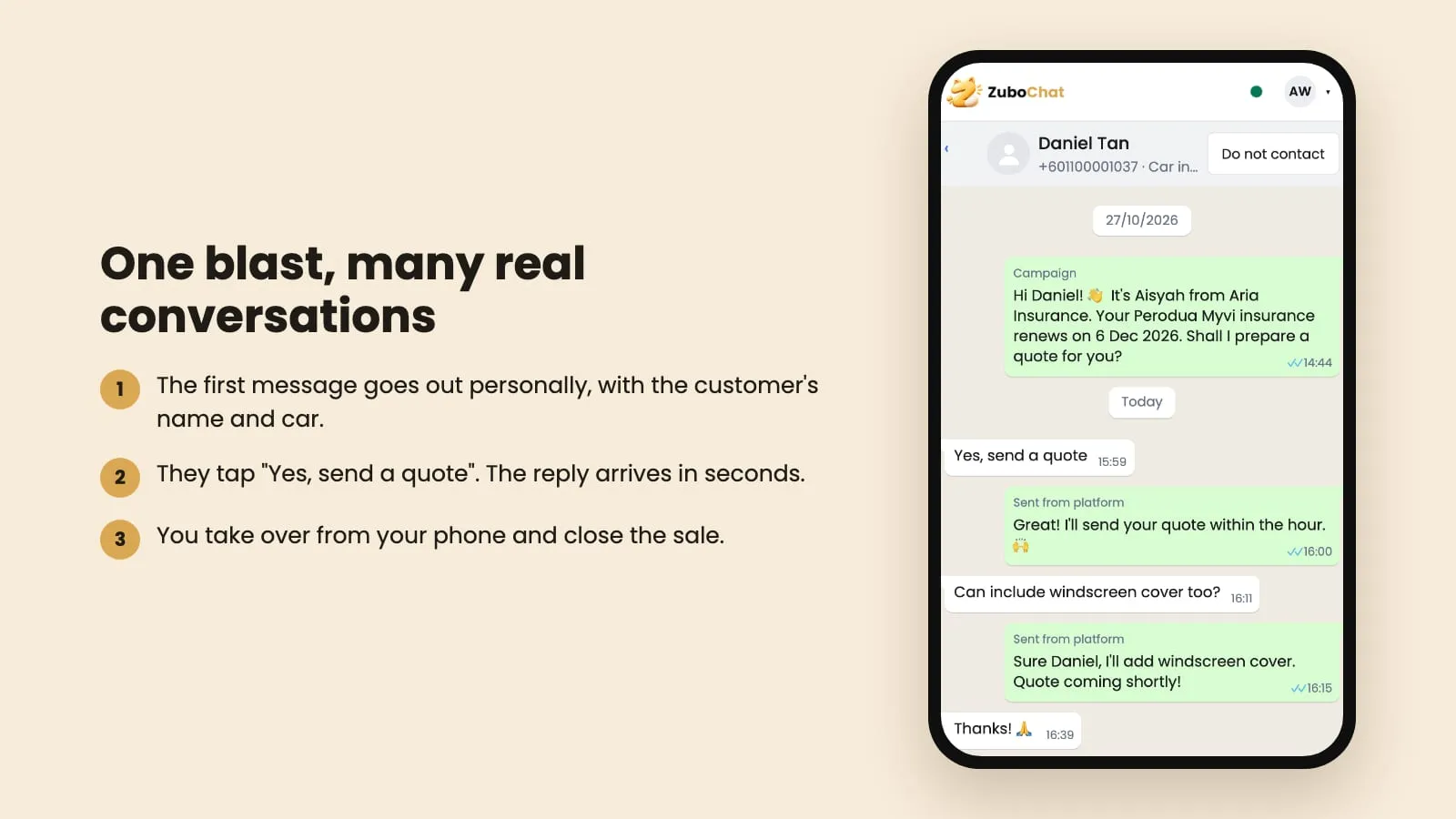
- Make the first line personal. Their name, your name and a real reason: “Hi Mr Tan, it’s Aisyah from Aria Insurance. Your Myvi insurance renews next month.”
- Ask one easy question, or use a poll. “Shall I prepare a quote?” with Yes, send a quote / Not now / Already renewed. A one-tap answer gets far more replies than a long message. Here’s why polls work so well.
- No links or brochures in the first message. Send them to the people who reply.
- Send slowly. A new number should start at 15–20 people a day and build up by about 10 a day each week, with a few minutes between messages, roughly 10am to 7pm. The full plan is in our guide to avoiding a restricted WhatsApp account.
- Give a way out. End with “Reply STOP if you’d rather not hear from me”, and remove anyone who does, for good.
- Follow up once. Two or three days later, one short reminder to people who didn’t answer. Then stop.
After the blast: reply fast
The blast only starts the conversation. Someone who taps “Yes, send a quote” at 3pm is ready now; by tomorrow they may have asked someone else. Set aside time to answer replies within the hour, and prepare your answers to the common questions before you send.
In ZuboChat: you choose the pace, the sending hours and a daily limit for each number, and it sends each message personally with the customer’s name. Each poll answer gets its own automatic reply within seconds, and every conversation lands in one shared inbox you can answer from a computer or your phone.
Before you hit send: a quick checklist
- The list is your own, cleaned, with no duplicates and no one who said stop
- Nobody on it got the same message from you or your team recently
- The first line has their name, your name and a reason
- One question or a poll, no links
- A “reply STOP” line
- A safe daily number for your number’s age, within normal hours
- Replies prepared for each answer, and time set aside to answer quickly
A WhatsApp blast doesn’t have to feel like spam. Sent to the right people, at a human pace, with a reason to answer, it’s the fastest way to start real conversations with your customers. If you’d like help setting one up, chat with us and we’ll send your first one together.